
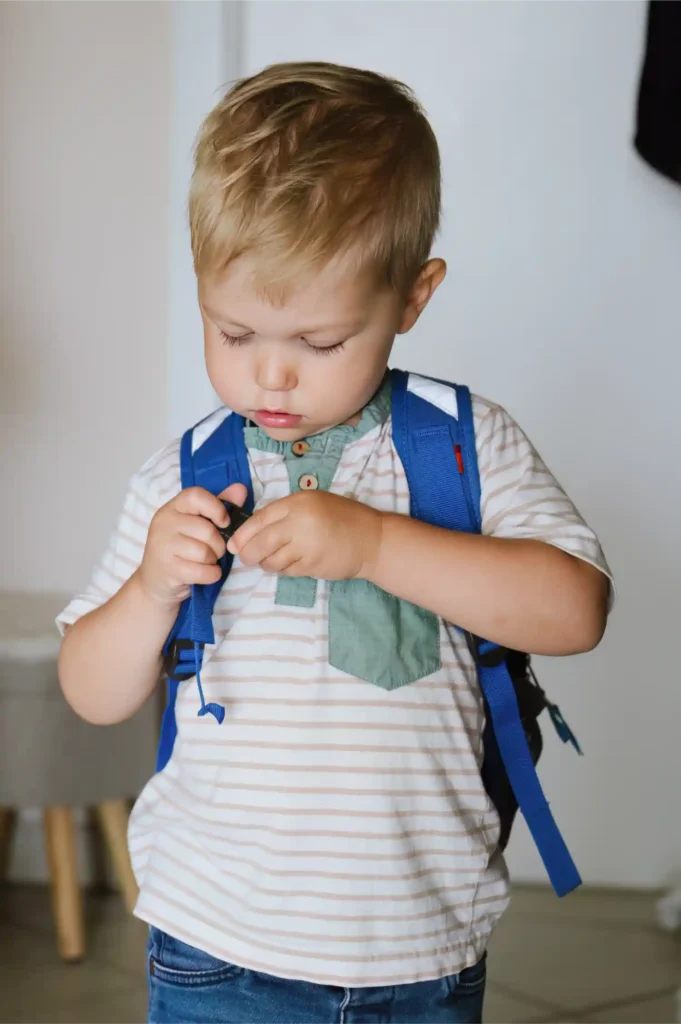
Starting daycare or Montessori school is one of the most meaningful milestones in early childhood. For many families, it’s a moment filled with excitement, hope, and—very often—a bit of uncertainty. Parents wonder whether their child will adjust easily, how to ease the transition, and what they can do to make those first days calm, positive, and successful.
Preparation matters. A thoughtfully planned transition helps children feel secure, confident, and ready to explore a new environment. It also helps parents feel more at ease, knowing they’ve laid the foundation for a smooth and happy start.
This comprehensive guide explains how to prepare your toddler or preschooler for the first day of daycare or Montessori school—emotionally, socially, and practically. It also highlights key Montessori principles that support independence, confidence, and comfort during this important transition.
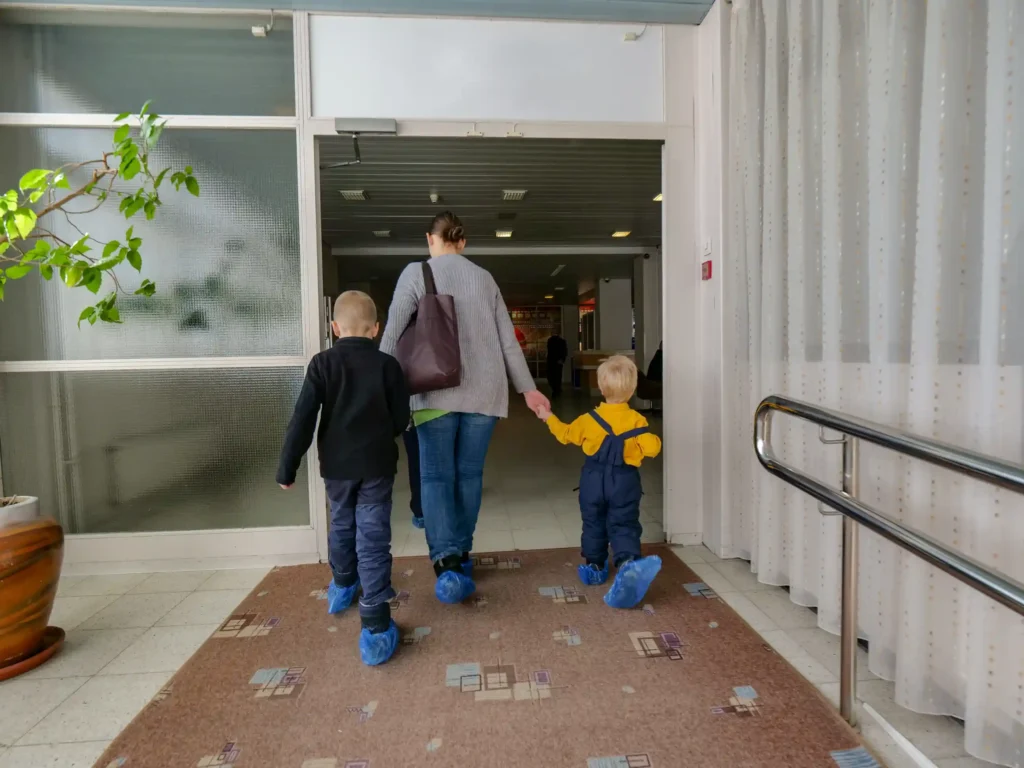
Understanding the Montessori Approach to Beginnings
The Montessori classroom is designed to be a peaceful, nurturing environment where children develop independence, curiosity, and confidence at their own pace. Preparing for the first day is not only about packing a lunch or labeling clothes—it’s about building security, trust, and readiness.
A Montessori environment emphasizes:
- Consistency and routine, which create emotional stability
- Independence, allowing children to feel capable and empowered
- Respect for individual pace, so transitions are gentle and supportive
- A prepared environment, where everything has a purpose and place
- Teacher guidance, offering warmth, trust, and connection
Understanding these values helps parents reinforce the same principles at home, creating a smoother transition between environments.
Recognizing Your Child’s Feelings About Starting Daycare
Children experience change differently based on age, temperament, and past experiences. Some eagerly explore new places; others cling to familiar routines. Preparing emotionally is just as important as preparing practically.
Signs your child may need extra reassurance:
- Increased clinginess
- Temporary sleep disruptions
- Questions or concerns about separation
- A desire to know what will happen
- Fluctuations in appetite or mood
These are natural. A reassuring tone, predictable routines, and patient listening help children understand that change is safe and manageable.
Establishing a Routine Before the First Day
One of the most supportive things parents can do is begin adjusting the child’s daily routine at least one to two weeks before the first day. Familiarity builds confidence, and routine builds security.
A consistent routine might include:
- Waking up at the same time each morning
- Eating meals on a predictable schedule
- Practicing quiet play or independent activities
- Introducing earlier bedtimes if needed
- Practicing packing and preparing the night before
A steady rhythm reduces morning stress and helps the child’s body and mind adapt to their new daily structure.
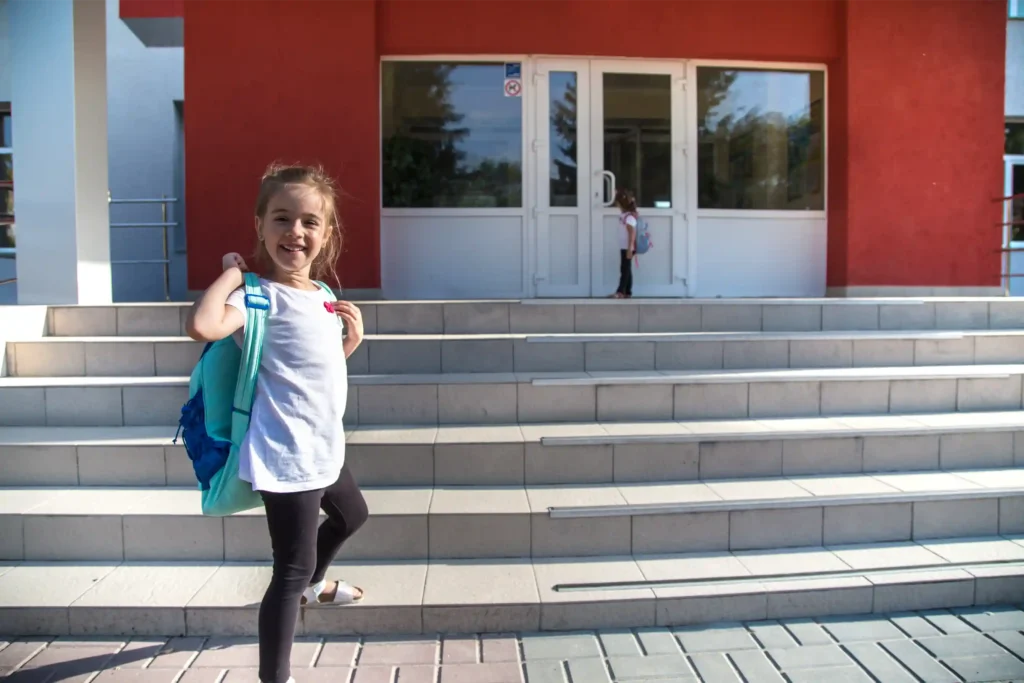
Talking to Your Child About What to Expect
Open, supportive conversations help children understand what daycare or Montessori school will be like. Keep explanations simple, positive, and factual.
Helpful ways to talk about the first day:
- Explain what the child will do: play, explore, eat, rest, learn.
- Explain who they will meet: teachers, classmates, helpers.
- Explain where you will be and when you will be back.
- Reassure them that new experiences can be fun and safe.
Montessori language encourages respect and empowerment. Instead of saying “Don’t worry,” try:
- “You will meet new friends today.”
- “Your teacher will help you if you need anything.”
- “You can try new activities on your own, and I will pick you up after story time.”
Simple, predictable explanations help children feel secure.
Practicing Independence at Home
Montessori environments encourage self-help skills, which give children confidence during transitions. These skills reduce frustration and empower children to navigate the classroom successfully.
You can practice at home by inviting your child to:
- Put on their own shoes or jacket
- Carry their backpack
- Practice opening lunch containers
- Wash hands independently
- Use the toilet or pull-up pants on their own
- Help pack their belongings
- Choose their clothing for the next day
Even imperfect attempts build confidence. Independence is not about perfection—it is about participation and effort.
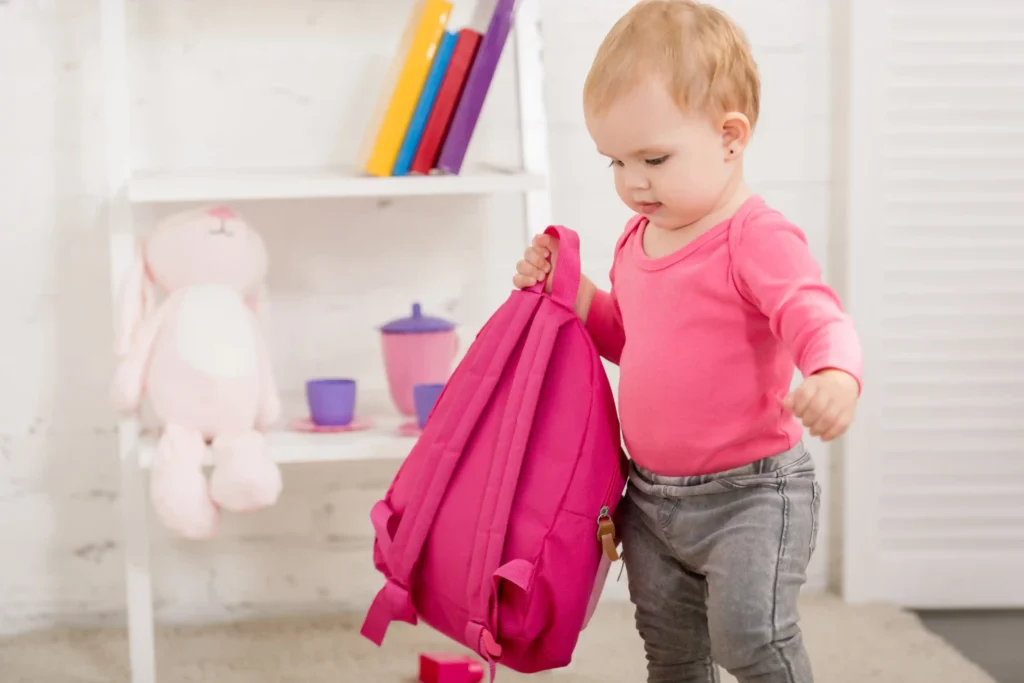
Creating a Calm Morning Routine for the First Day
The first day should be calm, predictable, and unhurried. A peaceful morning helps the child start the day with confidence.
A supportive morning routine may include:
- Waking up with enough time for a slow, gentle start
- Offering a healthy breakfast without rushing
- Keeping voices soft and the environment relaxed
- Using positive statements like “Today you will meet your teacher”
- Allowing extra time for getting dressed
- Avoiding overstimulating screens or distractions
Children mirror the emotional tone around them. A parent’s calm presence is often the most powerful tool in easing first-day nerves.
Preparing Practical Items for the First Day
Although every daycare or Montessori center has specific guidelines, most children need a few essentials. Preparing early helps avoid morning stress.
Common items include:
- A labeled backpack
- A complete change of clothes
- Indoor shoes
- Weather-appropriate outdoor wear
- A simple lunch and snacks (if required)
- A water bottle
- A comfort item (if allowed)
Montessori environments often prefer simple, functional, and easy-to-use items that encourage independence.
Labeling everything—clothes, containers, shoes—helps teachers support your child effortlessly.
Supporting Emotional Comfort With a Goodbye Ritual
A consistent, predictable goodbye routine helps the child feel safe. Montessori educators often recommend a simple, confidence-building goodbye ritual that is always the same.
Examples:
- A hug, a smile, and “Have a wonderful day. I’ll see you after outside playtime.”
- A special handshake you do together
- A short phrase repeated each morning
Consistency is key. Long, emotional goodbyes can increase stress. Calm, brief, warm goodbyes build trust.
Handling Separation Anxiety With Patience and Compassion
Separation anxiety is normal, healthy, and developmental—especially for toddlers and preschoolers meeting a new environment for the first time. With gentle support, children adapt beautifully.
What helps:
- Consistent routines
- A confident tone from the parent
- Trusting the teacher’s process
- Allowing the child to express feelings without rushing them
- Predictable pickup times
- Positive reinforcement after school
It’s important for parents to remain calm, even if the child cries. Teachers are trained in supporting transitions and comforting children during those early moments.
Most children settle within minutes once the parent leaves. Trusting the process helps both parent and child.
Helping Your Child Build Confidence Through Familiarity
Familiarity eases anxiety. Before the first day, try:
- Visiting the daycare or Montessori classroom during open house
- Exploring the playground together
- Looking at photos of the classroom
- Pointing out where cubbies, washrooms, and coat hooks are
- Meeting the teacher (if available before the start date)
The more familiar the environment becomes, the more quickly the child adapts.
Encouraging Social Skills Before the First Day
Children do not need advanced social skills to begin daycare. However, gentle practice helps them feel more prepared.
You can support this by:
- Encouraging turn-taking at home
- Practicing simple phrases like “Can I play with you?”
- Arranging short playdates
- Teaching how to ask for help
- Encouraging listening and patience
Montessori classrooms naturally foster social development through mixed-age groups, peaceful conflict resolution, and collaborative learning.
Discussing What Will Happen at Pick-Up
Predictability is comfort. Explain clearly to your child:
- Who will pick them up
- Where pickup will happen
- What time you will be back
- What they can expect after school
Consistency builds trust. Always arrive on time, especially during the early days, to strengthen security and connection.
What to Do After the First Day
After the first day, celebrate your child’s effort—not only their success. Ask open-ended questions that don’t pressure them to perform.
Helpful prompts:
- “What activities did you try today?”
- “What made you smile?”
- “What would you like to do again tomorrow?”
- “What part of the day felt new?”
Avoid overwhelming questions or pressure to share everything. Some children need time to process experiences quietly.
A cozy afternoon, a snack, and gentle conversation help children decompress after a big day.
Common Challenges and How to Respond Calmly
If your child is hesitant to go back
Stay consistent, offer reassurance, and maintain routines.
If tears continue for several days
Check in with the teacher while remaining calm at drop-off.
If your child becomes more clingy at home
Provide extra connection, affection, and one-on-one time.
If your child has trouble with naps or meals
Transitions can temporarily affect habits; children usually self-regulate after a few weeks.
Patience and predictability help children adjust at their own pace.
Building a Positive Relationship With Teachers
Strong parent-teacher partnerships create the foundation for a successful daycare or Montessori experience.
Ways to build connection:
- Greet teachers warmly
- Share helpful information about your child’s routines or preferences
- Communicate respectfully and openly
- Trust their expertise and daily observations
- Ask questions during scheduled times rather than rushed drop-offs
When parents, teachers, and children feel connected, transitions become smoother and more joyful.
Maintaining Montessori Values at Home
Supporting Montessori principles at home helps children feel continuity between environments. You can integrate simple practices like:
- Creating child-sized, accessible spaces
- Offering choices (“Would you like the blue shirt or the green one?”)
- Encouraging independence in daily routines
- Allowing unstructured play
- Modeling calm, respectful communication
- Keeping toys and materials organized and minimal
A harmonious link between home and school environment fosters confidence and deepens the child’s sense of stability.
Creating a Positive Association With School
Children thrive when school is associated with joy, discovery, and safety. You can reinforce this by:
- Speaking positively about school
- Sharing stories about your own school experiences
- Displaying your child’s artwork or creations at home
- Celebrating small milestones
- Keeping routines predictable and calm
Positive emotional associations help children adapt more easily and build a healthy mindset toward learning.
Long-Term Benefits of a Smooth Transition
A thoughtful, gentle introduction to daycare or Montessori school helps children:
- Build confidence and independence
- Develop emotional resilience
- Form strong relationships with teachers and peers
- Embrace curiosity and exploration
- Develop trust in new environments
- Feel secure during future transitions (kindergarten, camps, etc.)
A smooth start sets the stage for a joyful, enriching learning journey.
check our Website and programs!
https://mumsmontessori.ca/
Frequently Asked Questions
How far in advance should I start preparing my child?
Most families benefit from starting emotional and routine preparations one to two weeks before the first day. Younger children or those with higher sensitivity may need a bit longer.
What if my child cries during drop-off?
Crying is completely normal. Stay calm, keep goodbyes short, and trust the teacher to support your child. Most children settle quickly after the parent leaves.
Should I stay in the classroom on the first day?
Most Montessori and daycare programs encourage a gentle but clear separation. Prolonged stays can make separation more difficult for the child. Follow the center’s guidance.
How can I help my child feel more independent before starting?
Practice small self-help tasks: carrying their backpack, washing hands, putting on shoes, opening containers, and cleaning up toys.
What if my child refuses to participate in activities?
Children adjust at their own pace. Teachers gently guide them without pressure, allowing comfort and curiosity to develop naturally.
How do I know if my child is adjusting well?
Signs of healthy adjustment include curiosity, brief moments of comfort with teachers, participation in activities, gradual separation ease, and reduced crying over time.
Final Thoughts
The first day of daycare or Montessori school is a beautiful milestone—one that marks the beginning of new friendships, new discoveries, and growing independence. With gentle preparation, calm routines, and emotional support, children learn that new environments are safe, exciting, and full of opportunities.
Parents play the most important role in shaping this transition. Through consistency, connection, and trust, you help your child step confidently into their new world—ready to learn, explore, and thrive.